
Puerto Rico with a mini scuba tank: marine reserves, coral rules and the spearfishing ban
Culebra, Tres Palmas, Caja de Muertos, Desecheo and Mona: what Puerto Rico's fishing regulation allows in each reserve, the tank and spear ban, and coral rules.
Updated October 20, 2026 · 4 min read · by the OXSEA team
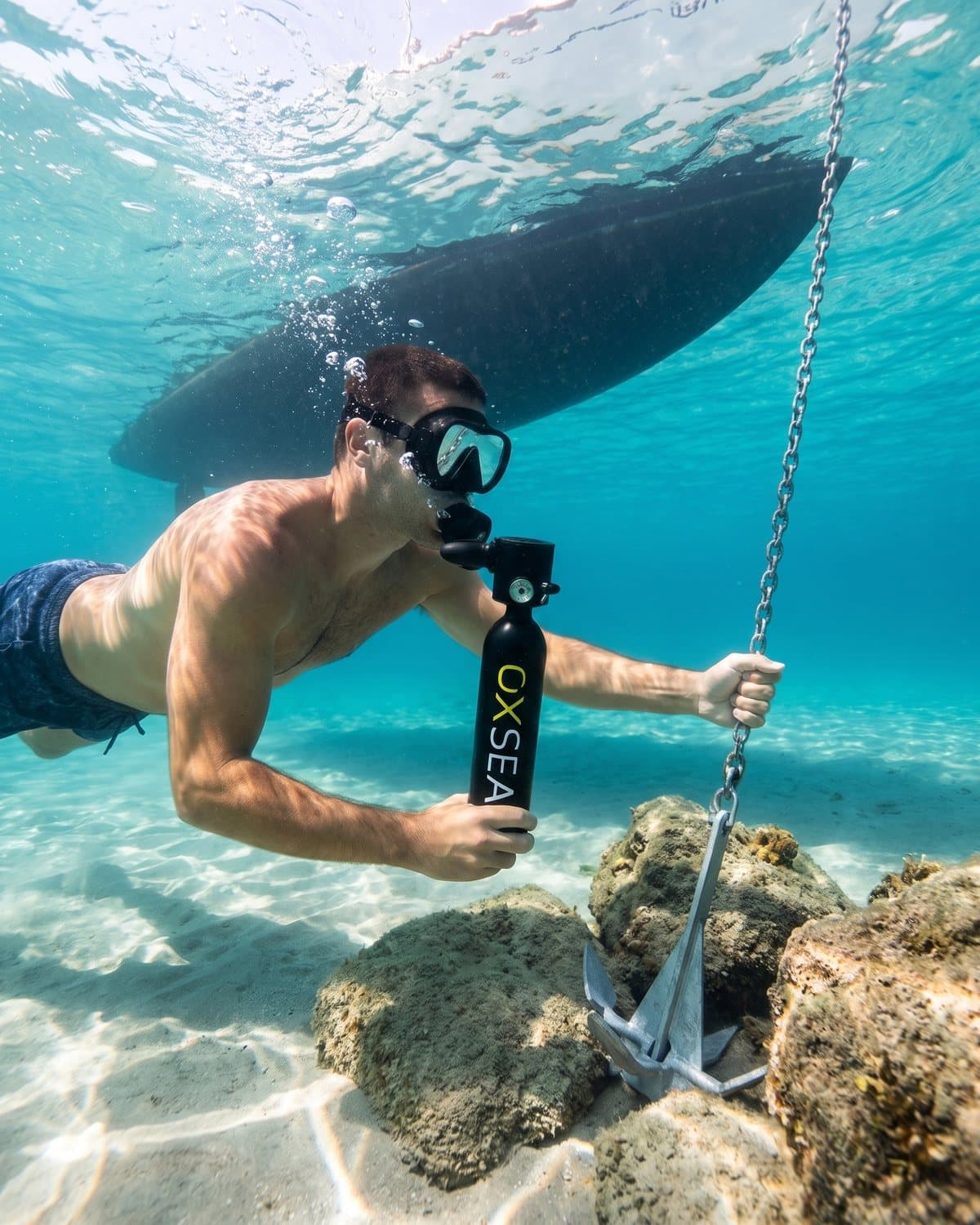
Puerto Rico's reefs are close to shore, the water is warm all year and the visibility is often excellent. It is a natural place for a small tank. It is also a place with a precise fishing regulation, Reglamento 7949 of the Department of Natural and Environmental Resources (DRNA), several marine reserves, and corals protected by federal law. Here is what to know before you get in.
The first rule: no spear with a tank
For recreational fishers, Puerto Rico's regulation makes it illegal to use a spear and a dive tank at the same time (article 18.2). Recreational spearfishing is allowed only on a breath hold (article 18.9). Air compressors that feed divers through a hose, known as hookah, are banned for fishing too. The only exception is lionfish, for volunteers who hold a written authorization from the DRNA Secretary.
The regulation also bans spearfishing, with or without a tank:
- at night, from sunset to sunrise;
- from piers, and in reservoirs, rivers and estuaries;
- in bathing areas, marine reserves and on artificial reefs;
- with a loaded speargun within 100 feet of the shore.
In short: in Puerto Rico, the mini tank is for looking and for working on the boat. Our guide to spearfishing with a mini tank in the US compares the rules with the other states.
The marine reserves
Reglamento 7949 sets out several areas where fishing is banned or tightly limited. They are also some of the island's best places to look.
| Area | What the regulation says |
|---|---|
| Canal Luis Pena Natural Reserve, Culebra | Fishing prohibited inside the delimited area (article 8.10). |
| Tres Palmas Marine Reserve, Rincon | Fishing prohibited inside the delimited area (article 8.9). The reserve was created by Law 17 of 2004. |
| Caja de Muertos Natural Reserve, off Ponce | A no-take and reef recovery zone where taking any marine life is prohibited, lionfish excepted (article 8.41). |
| Desecheo Island | Marine reserve: no fishing within half a mile of the island (article 8.7, Law 57 of 2000). |
| Mona and Monito islands | Natural reserve: fishing limited to hook and line, from shore in two zones on Mona, and prohibited within a one-mile restricted zone (article 8.8). |
Desecheo and Mona are offshore, exposed and remote: they are trips for experienced boaters, not first outings with a small tank. Culebra's Luis Pena Channel and Tres Palmas are far easier to reach. Tres Palmas is also a famous big-wave surf spot in winter, so pick calm days.
The regulation also bans anchoring at specific reef sites on the west coast, among them Tourmaline Reef and Abrir La Sierra (article 8.42).
Coral: protected by federal law
Elkhorn coral is listed as threatened under the Endangered Species Act, with critical habitat designated in Puerto Rico, Florida and the US Virgin Islands. The federal rule bans killing, harming or collecting it. Puerto Rico also has its own coral reef protection law, Law 147 of 1999.
What that means in the water:
- Anchor in sand, away from coral, as NOAA advises, or use a mooring where there is one.
- Never stand on coral to clear your mask or rest. Without a buoyancy jacket, it is tempting. Surface, or rest over sand.
- Keep your fins up. On shallow reefs, one careless kick breaks branches that took years to grow.
- Choose a reef-safe sunscreen. NOAA notes that oxybenzone is toxic to corals.
Diving with a small tank in Puerto Rico
- Warm water helps. You breathe more calmly in warm water than in cold, so you get closer to the maximum times: up to 8 minutes with the OX500 or OX500Plus, about 15 with the OX1000. Effort still shortens them.
- The OXAIR mask suits reef snorkeling: breathe through the snorkel at the surface, and the tank takes over when you drop down.
- No power at the beach? The hand pump refills a half-liter tank in about 20 minutes, with no electricity.
- Watch the swell. Winter swells hit the north and west coasts hard. Snorkel on calm days and in sheltered bays.
- Fly a dive flag and never dive alone. See dive flag rules in the US.
Breathe continuously, never hold your breath on the way up, and ascend slowly.
Flying in with a tank
Flights from the mainland are domestic, but the tank rule is the same as anywhere: it must be completely empty, with the valve open or the head removed, and declared at check-in. Check with your airline.
Sources
- Puerto Rico Department of Natural and Environmental Resources, Reglamento de Pesca de Puerto Rico, Reglamento 7949 of November 24, 2010, articles 8.5 to 8.10, 8.41, 8.42, 18.2 and 18.9
- NOAA Fisheries, elkhorn coral
Checked in October 2026. DRNA can amend the fishing regulation and reserve boundaries: check with the department before you fish or anchor.
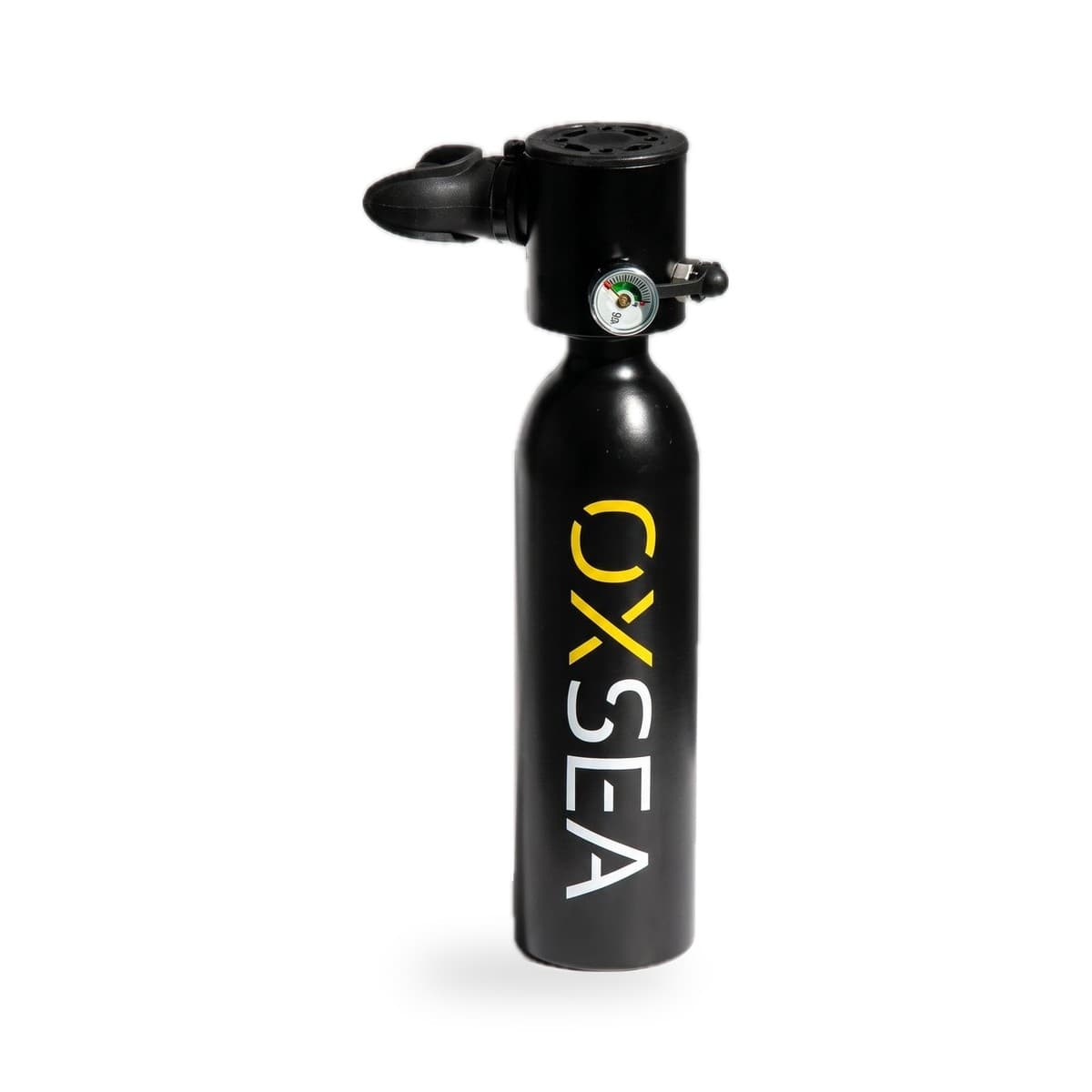
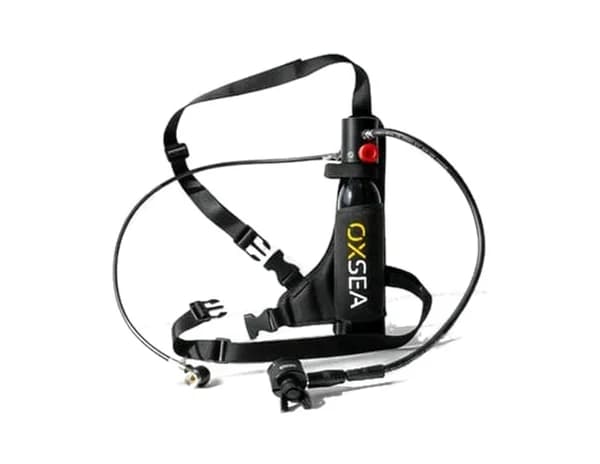
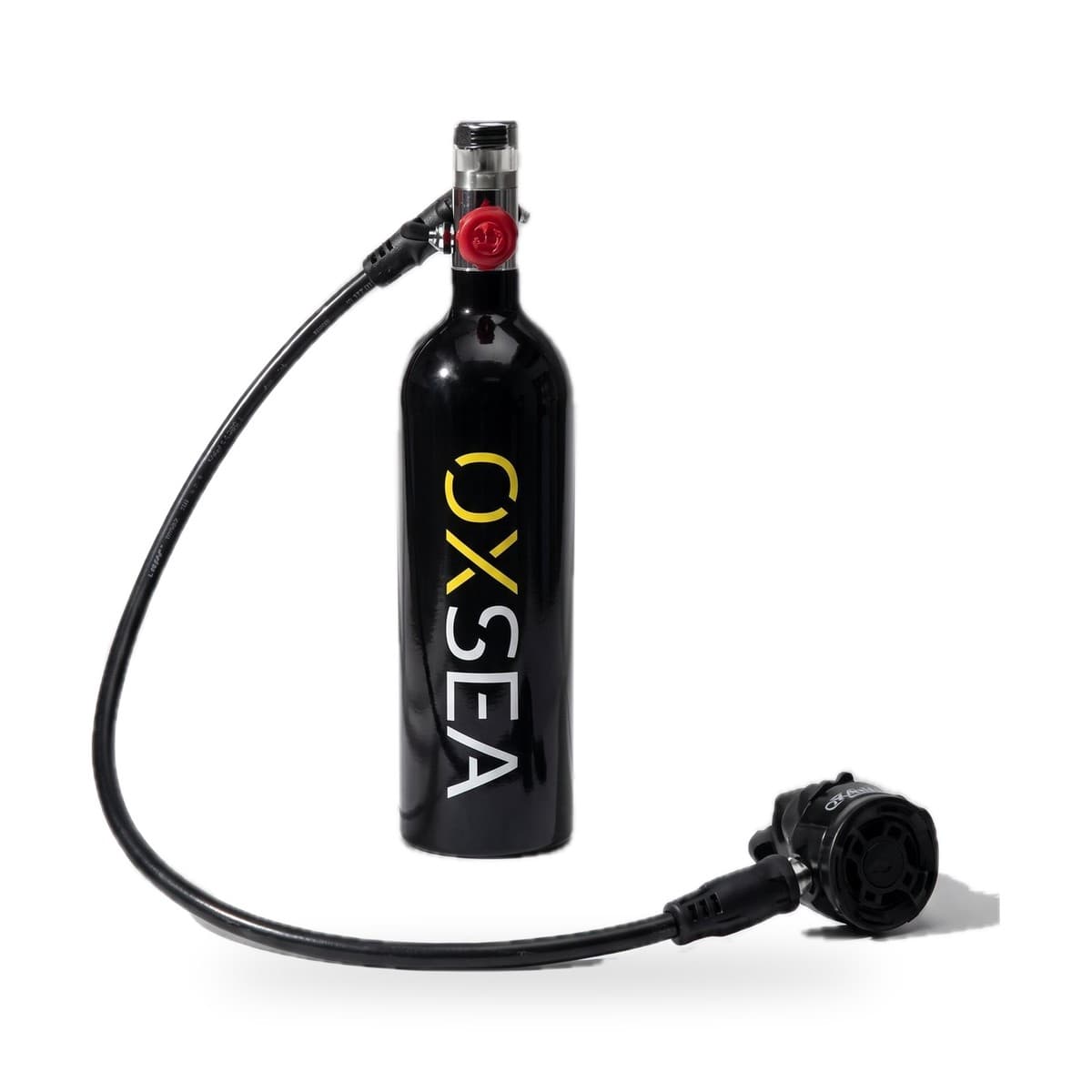
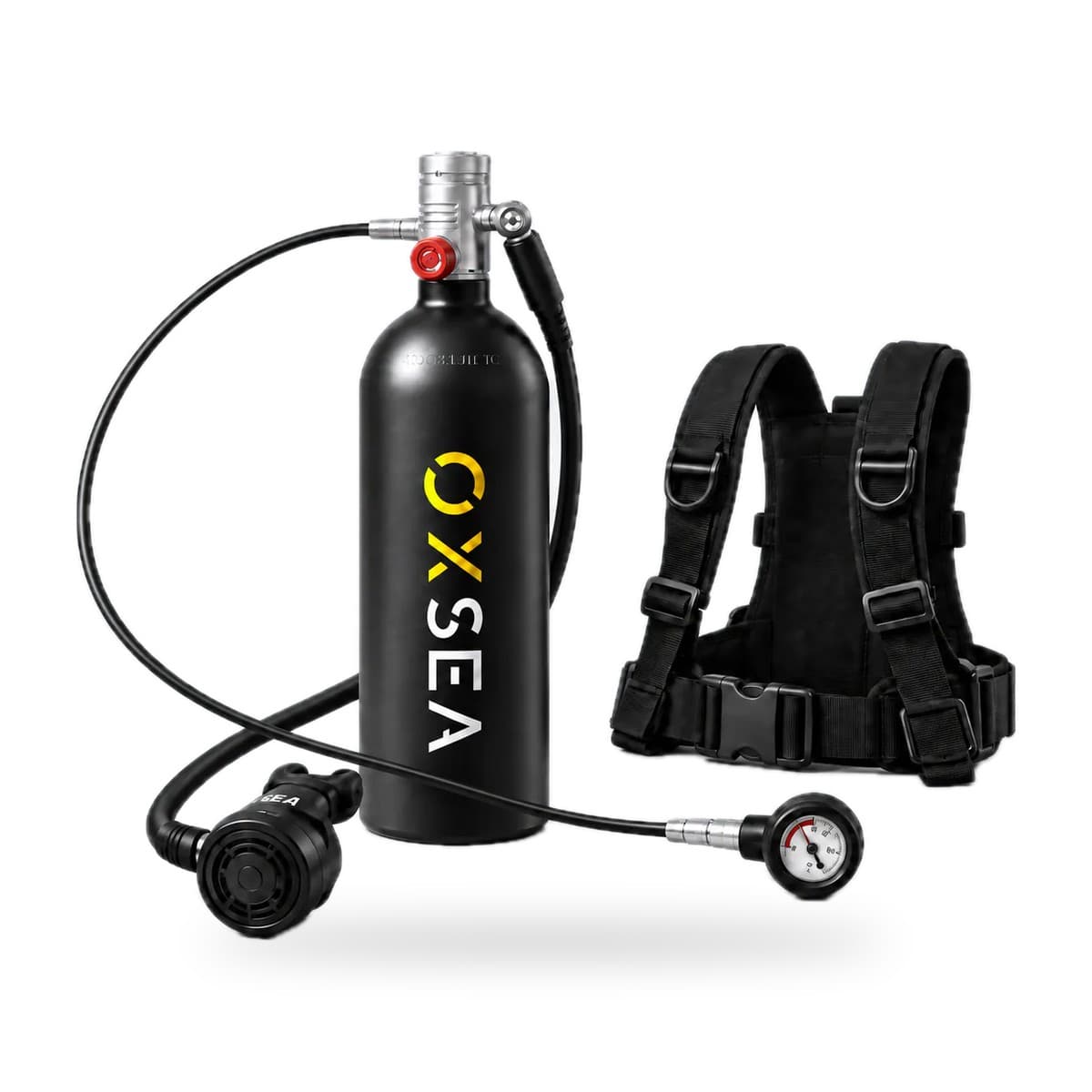
The range
More guides
Dive flag rules in the US: what to fly when you go under the boat with a mini tank
5 min read
Spearfishing with a mini scuba tank in the US: what Florida, California, Texas, Hawaii and Puerto Rico allow
6 min read
Cleaning your own hull in the water in California: copper paint, the 90-day wait and the soft-tool rule
5 min read