
Cleaning your own hull in the water in California: copper paint, the 90-day wait and the soft-tool rule
What California's pesticide and coastal agencies say about in-water hull cleaning, the Marina del Rey rule, and how to scrub your boat without a copper plume.
Updated October 20, 2026 · 5 min read · by the OXSEA team
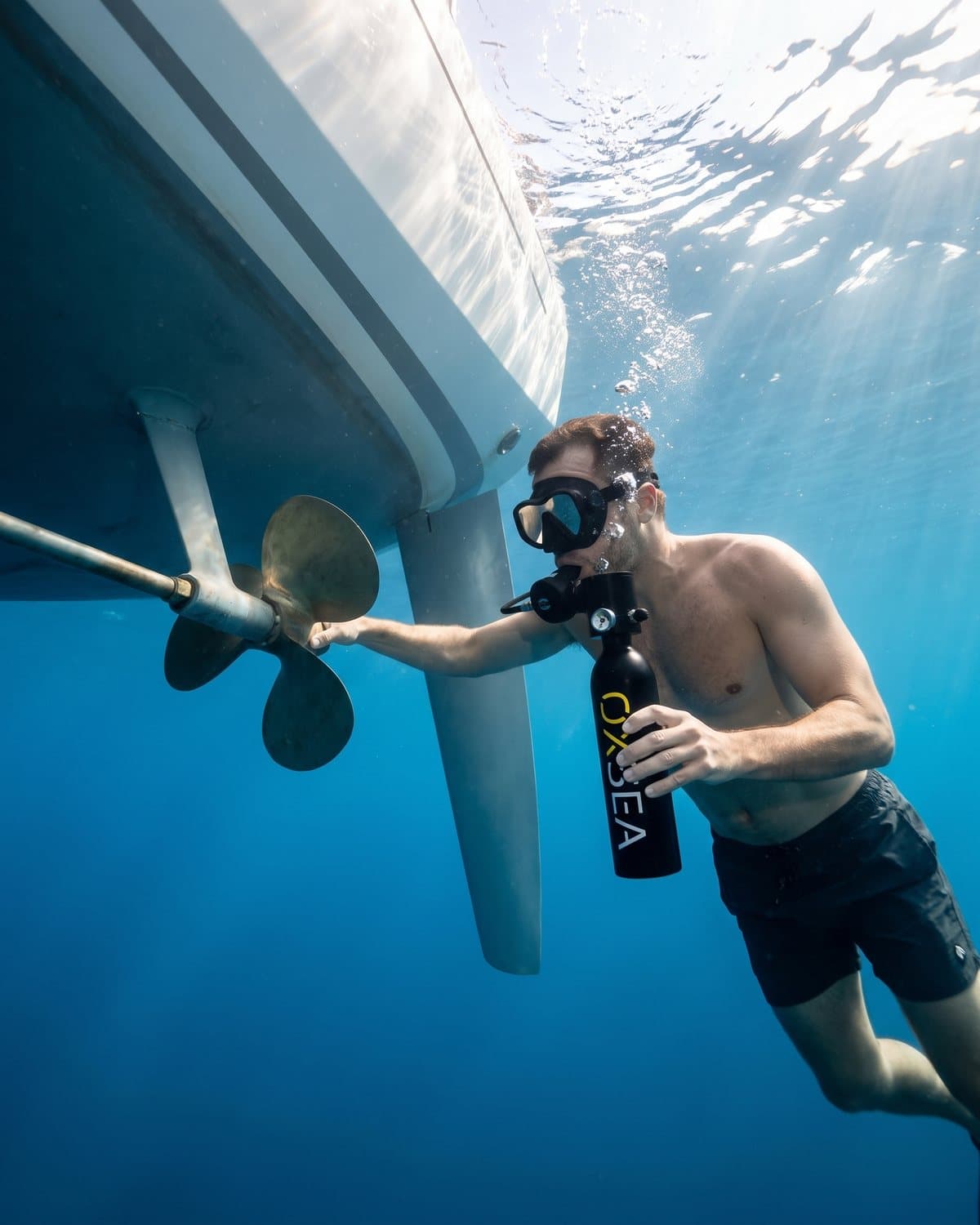
Most boats kept in a California slip wear copper bottom paint, and most of them need a scrub every few weeks. That scrub is the moment the state cares about: done gently, it removes slime and barnacles; done hard, it sends a blue cloud of copper into the marina. If you plan to do it yourself with a mini tank, here is what the official guidance says and how to stay on the right side of it.
Why California cares about copper
In 2009, the California Department of Pesticide Regulation (DPR) found that dissolved copper in more than half of the water samples from salt and brackish marinas exceeded the federal chronic standard meant to protect aquatic life, and about a third exceeded the acute standard. Its conclusion: copper bottom paint on recreational boats is a major source, and the two main ways it gets into the water are passive leaching from painted hulls and underwater hull cleaning.
San Diego's Shelter Island Yacht Basin is the best-known case. The regional water board's copper cleanup plan, adopted in 2005, attributes about 98 percent of the copper entering the basin to bottom paint on boats moored there: around 93 percent leaches out on its own and around 5 percent comes off during hull cleaning. The plan called for a 76 percent cut in copper loading, in stages up to 2022.
What is actually regulated
The paint. Since July 1, 2018, copper antifouling paints labeled for recreational boats in California may not leach more than 9.5 micrograms of copper per square centimeter per day. DPR keeps a list of paints by leach rate. If you are due for a haul-out, that list is the place to start.
The cleaning. No statewide rule tells a boat owner how to scrub a hull: the state guidance below is voluntary. Local rules can go much further, and the clearest example is Los Angeles County.
Marina del Rey: certified divers only. Since 2018, Los Angeles County Code section 19.12.1146 allows only divers certified in hull cleaning best practices to clean hulls in the water in the harbor, and boat owners can be cited if their boat is cleaned by a diver who is not certified. In Marina del Rey, a mini tank is for checking the prop and freeing a line, not for scrubbing the bottom yourself.
Other harbors and private marinas set their own conditions. Ask the harbor office before you clean in your slip.
The California Coastal Commission's hull cleaning practices
The Coastal Commission's factsheet on hull coatings and cleaning lists the practices it recommends for in-water work. It says plainly that the list is not a requirement, but it is what marinas and harbor offices refer to:
- Inspect the hull regularly and clean only when the growth calls for it.
- Clean biocide paints as little as possible, so they keep working.
- Clean only by hand, with cloth, plastic scrapers or soft scrubbers. If the growth needs metal scrapers, haul the boat out instead.
- Use the least abrasive method that works. Never wet-sand a hull in the water.
- Do not create a visible plume of bottom paint.
- Leave a newly painted hull alone for at least 90 days.
- Do not sand or strip paint underwater.
- Wash the boat with phosphate-free, biodegradable products, in small amounts, and avoid anything with ammonia, bleach, chlorinated solvents, petroleum distillates or lye.
The same factsheet notes that professional cleaners can follow the California Professional Divers Association's certification program, built on these practices.
How a scrub goes with a mini tank
A full hull scrub on a 30-foot boat is more than a few minutes of work. Plan for it:
- Check the paint's age. Under 90 days, wait.
- Ask the marina whether owners may clean their own hulls in the slip. In Marina del Rey, the answer is no unless you are certified.
- Engine off, keys out, dive flag up. Someone on the dock if you can.
- Start with the running gear. Prop, shaft, strut and rudder collect the hardest growth. Plastic scraper, gloves, short sessions. Our guide on cleaning a boat propeller goes through it step by step.
- Then the hull, gently. A soft pad or cloth, long strokes, working with the current so the water carries what you loosen away from you and your view. If you see color in the water, you are pressing too hard.
- Check the anodes while you are there. See how often to change boat anodes.
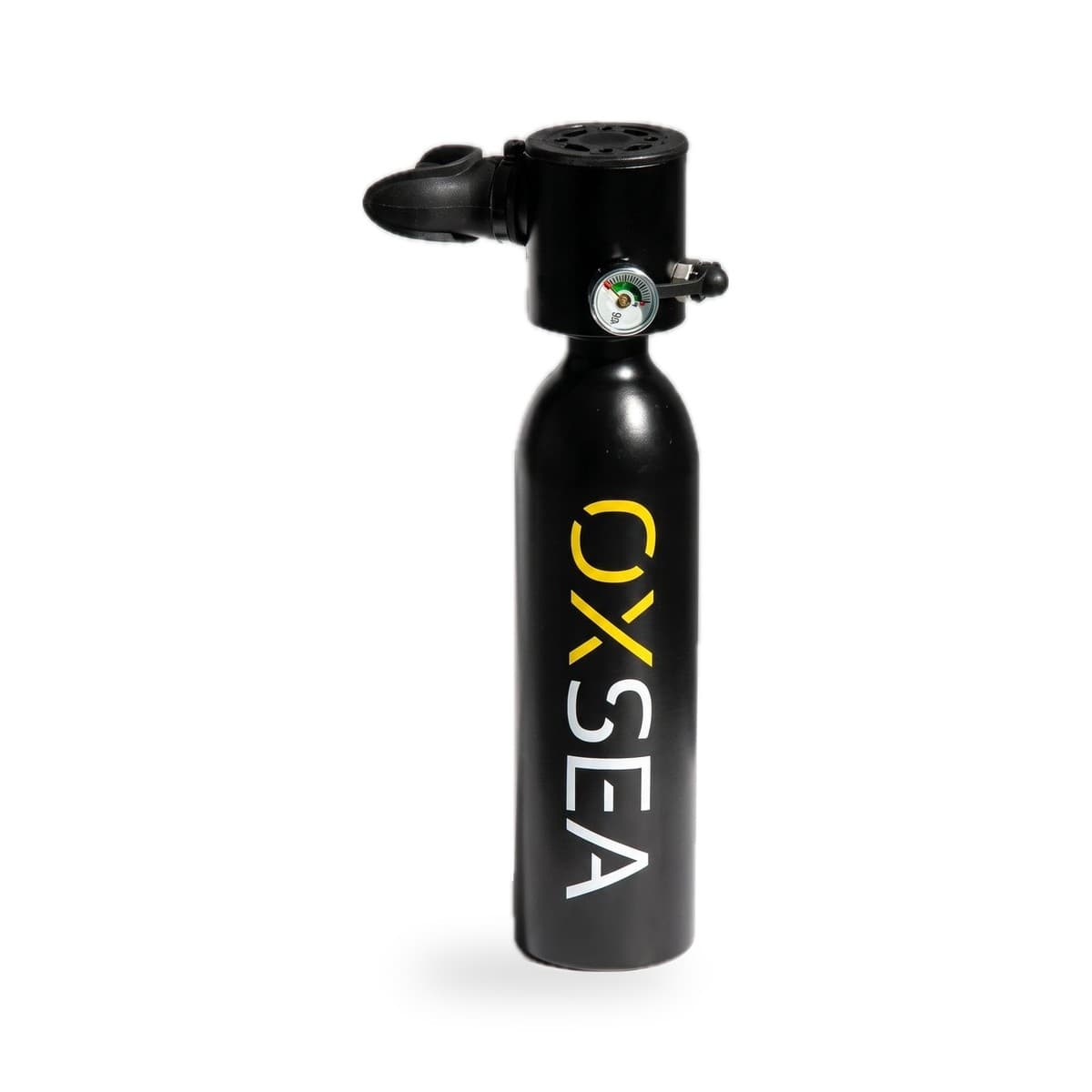
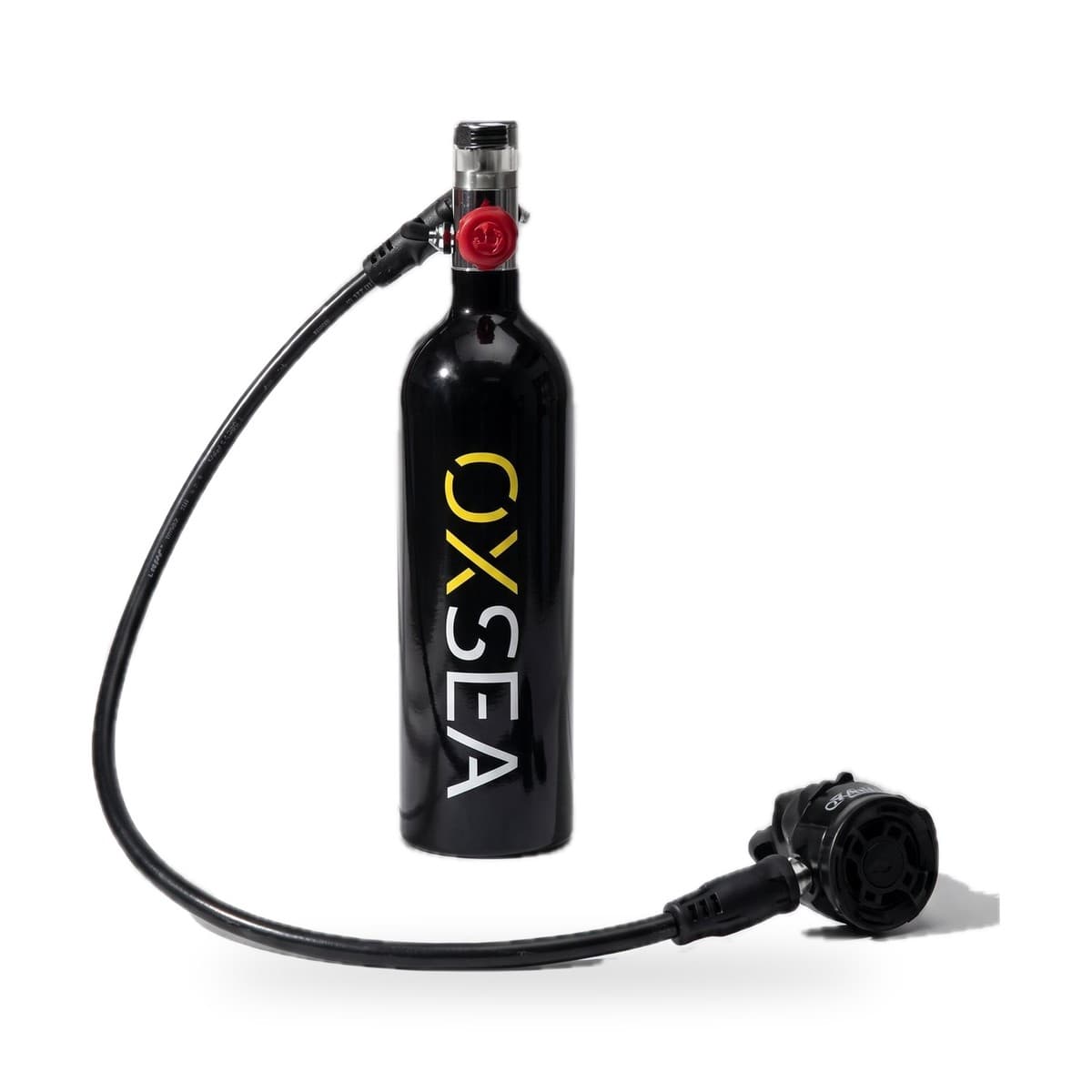
A half-liter tank gives up to 8 minutes, which is a look rather than a scrub. For this kind of job, the OX1000 (about 15 minutes) or the OX2000 (20 to 25 minutes) let you work at a calm pace, with both hands free. Scraping is hard work and shortens those times: come up with air left on the gauge. The 12 V compressor refills them on the dock between sessions.
Safety in a marina
Marinas are tricky water. Visibility is often poor, there may be shore-power cables and lines around the slip, and other boats come and go. Never dive alone, never go under a boat with its engine running, and keep a hand on the hull. Breathe continuously, never hold your breath on the way up, and ascend slowly. Our general guide to cleaning a hull in the water and the safety guide on oxsea.shop cover the rest.
Sources
- California Department of Pesticide Regulation, California Notice 2018-03, final decision on copper-based antifouling paints
- California Coastal Commission, Boat Hull Coating Selection and Hull Cleaning for Water Pollution Prevention, factsheet revised 2017
- Los Angeles County Department of Beaches and Harbors, in-water hull cleaning in Marina del Rey
- San Diego Regional Water Quality Control Board, Shelter Island Yacht Basin copper TMDL and Basin Plan, chapter 7
Checked in October 2026. Marina and harbor rules vary from one slip to the next: ask yours before you clean in the water.
The range


More guides
Dive flag rules in the US: what to fly when you go under the boat with a mini tank
5 min read
Spearfishing with a mini scuba tank in the US: what Florida, California, Texas, Hawaii and Puerto Rico allow
6 min read
Cleaning your hull in the water in Florida: what Clean Marinas allow, and what to do when a manatee shows up
4 min read