
12 V compressor for mini scuba tanks: refill from the boat battery
The OXSEA 12 V / 220 V compressor fills a 0.5 liter tank in about 12 minutes and a 1 liter tank in about 20. Battery, wiring and clean air, for US boat owners.
- 0.5 L tank
- About 12 minutes
- 1 L tank
- About 20 minutes
- Power
- 12 V battery or 220 V mains
- Fits
- All four OXSEA tanks
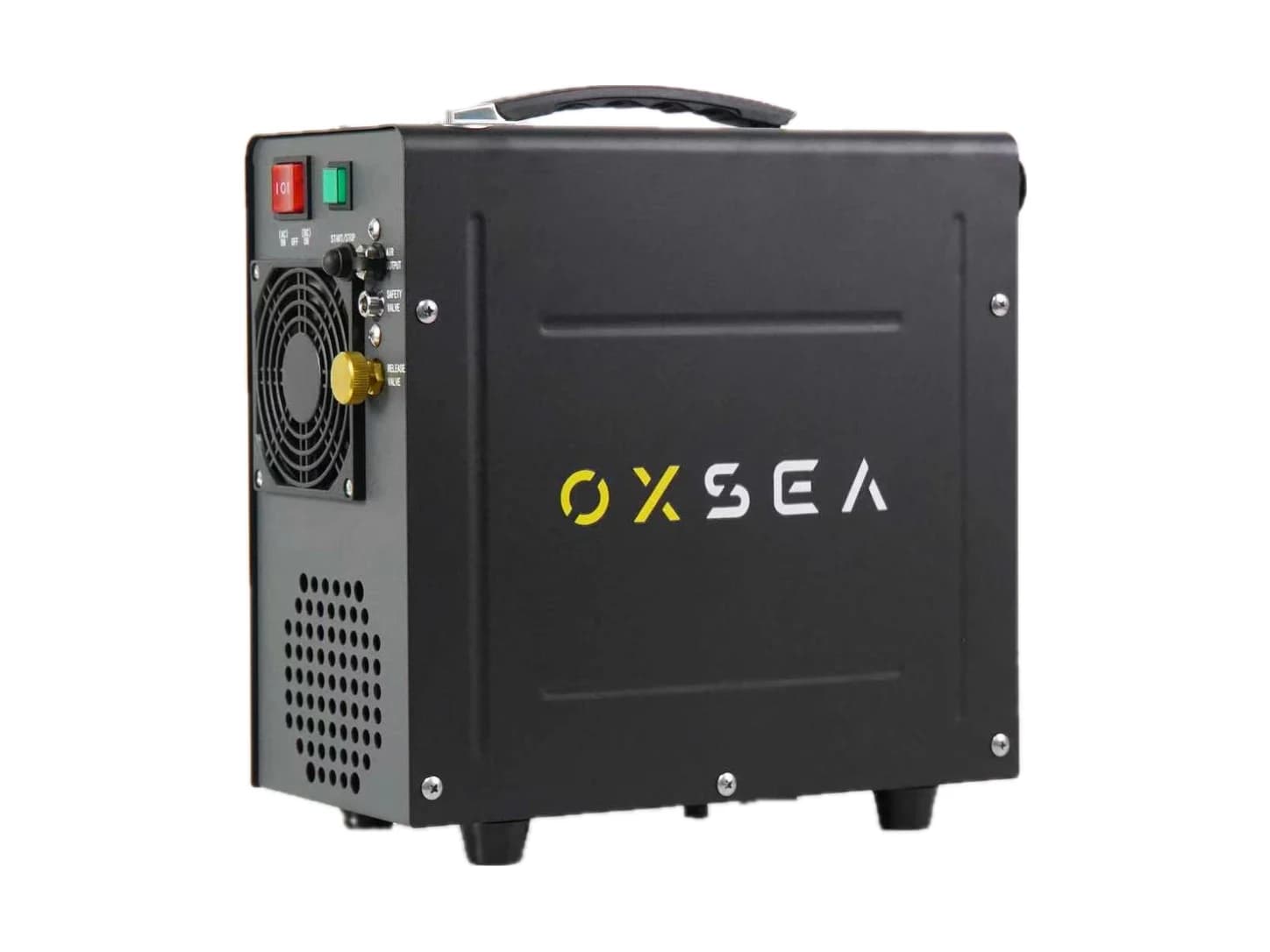
- The 12 V / 220 V compressor alone
- OX1000 + compressor pack
- OX500Plus + compressor pack
- OX2000 + compressor pack
Prices, stock and delivery on oxsea.shop
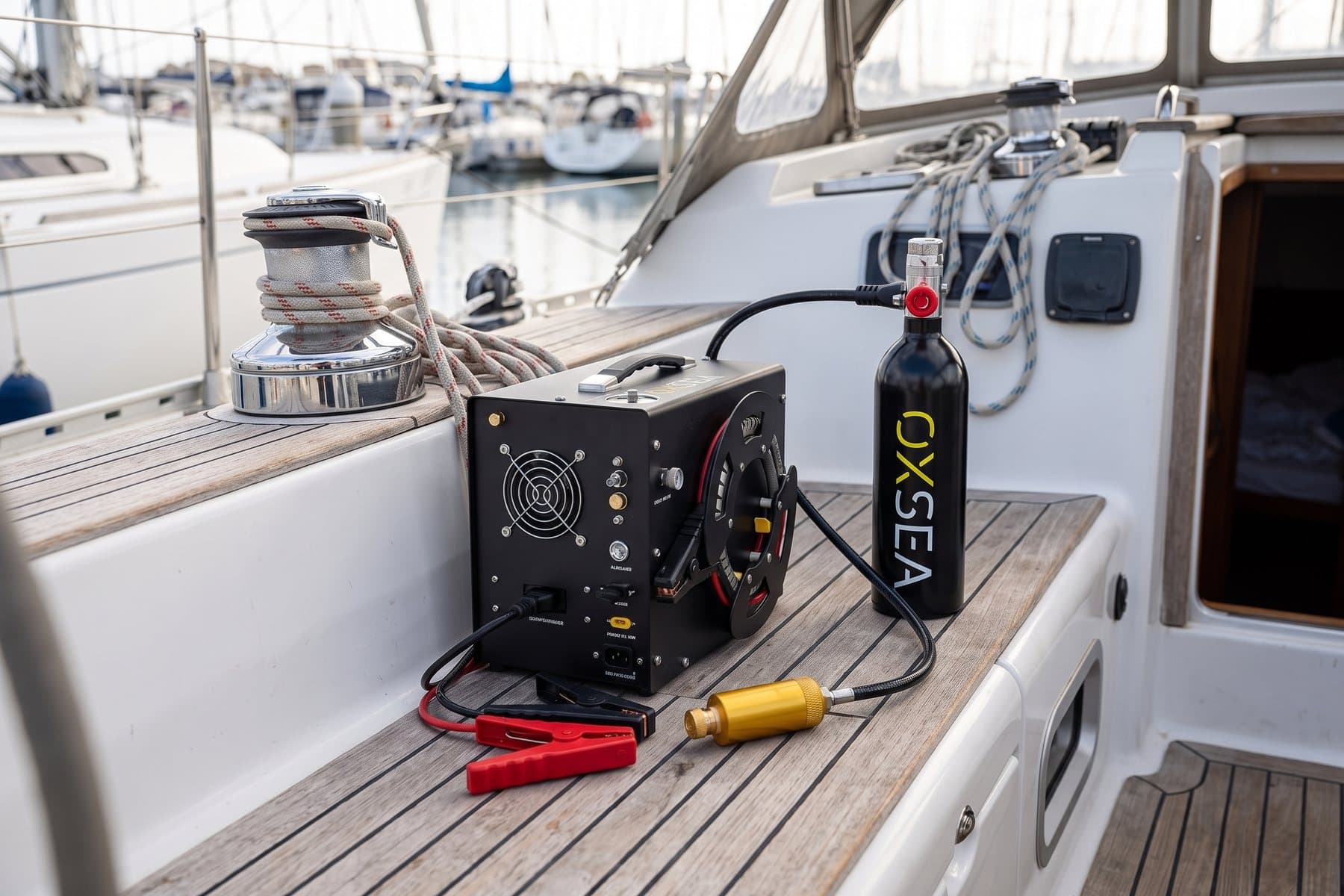
The 12 V / 220 V compressor is how most OXSEA owners refill without effort. It is a portable high-pressure compressor with its own filtration, built with components chosen for the marine environment. You clamp it to a 12 V battery or plug it into the mains, connect the tank, set the pressure and let it run.
Fill times
| Tank | Volume | Time to fill |
|---|---|---|
| OX500 | 0.5 L | About 12 minutes |
| OX500Plus | 0.5 L | About 12 minutes |
| OX1000 | 1 L | About 20 minutes |
| OX2000 | 2.3 L | Longer: start it when you come out of the water |
It is the only way to fill the OX1000 and the OX2000 without a full-size dive cylinder, because the hand pump only fills the 0.5 liter tanks.
Why not a tire inflator or a shop compressor
A tire inflator works at a few bar. A shop air compressor tops out around 150 psi. A mini scuba tank needs 200 bar, about 2,900 psi, and the air has to be clean enough to breathe. Neither tool is built for that. You need a high-pressure breathing-air compressor with filters, which is what this one is.
Which battery
On a boat, connect it to the house battery, never to the engine's starting battery. A starting battery is built for a big burst of current for a few seconds, not for being drained and recharged over and over.
How much a fill takes from the battery depends on the current the compressor draws, which is printed on its rating plate. As a worked example, at 30 amps a 12-minute fill uses about 6 amp-hours and a 20-minute fill about 10. On a lead-acid house bank, only about half the rated capacity is really usable, so a 100 Ah battery leaves you around 50 Ah to share with the fridge and the electronics. Two or three fills in a day are fine; a long string of them back to back is not. Recharge the battery fully afterward.
Ashore, a car battery does the job for a fill or two, engine off. Our article on refilling from a boat battery goes through the full math, the wiring and the cable sizes.
Engine off, clean air
It is tempting to leave the engine running so the alternator backs up the battery. Do not. Exhaust contains carbon monoxide, and whatever the compressor draws in on deck goes into the tank you will breathe from under the hull.
- Shut the engine and the generator down before you start.
- Set the compressor up outside, level, in the shade, with the air intake facing into the wind.
- In a marina, watch for exhaust from neighboring boats.
- Stay next to it during the fill, with an eye on the gauge.
Care
The filter changes in a few minutes, and the OXSEA School on oxsea.shop has a video for it, as well as one on using the compressor. Watch them before your first fill, not on the day a line gets wrapped around the prop.
Compressor or hand pump?
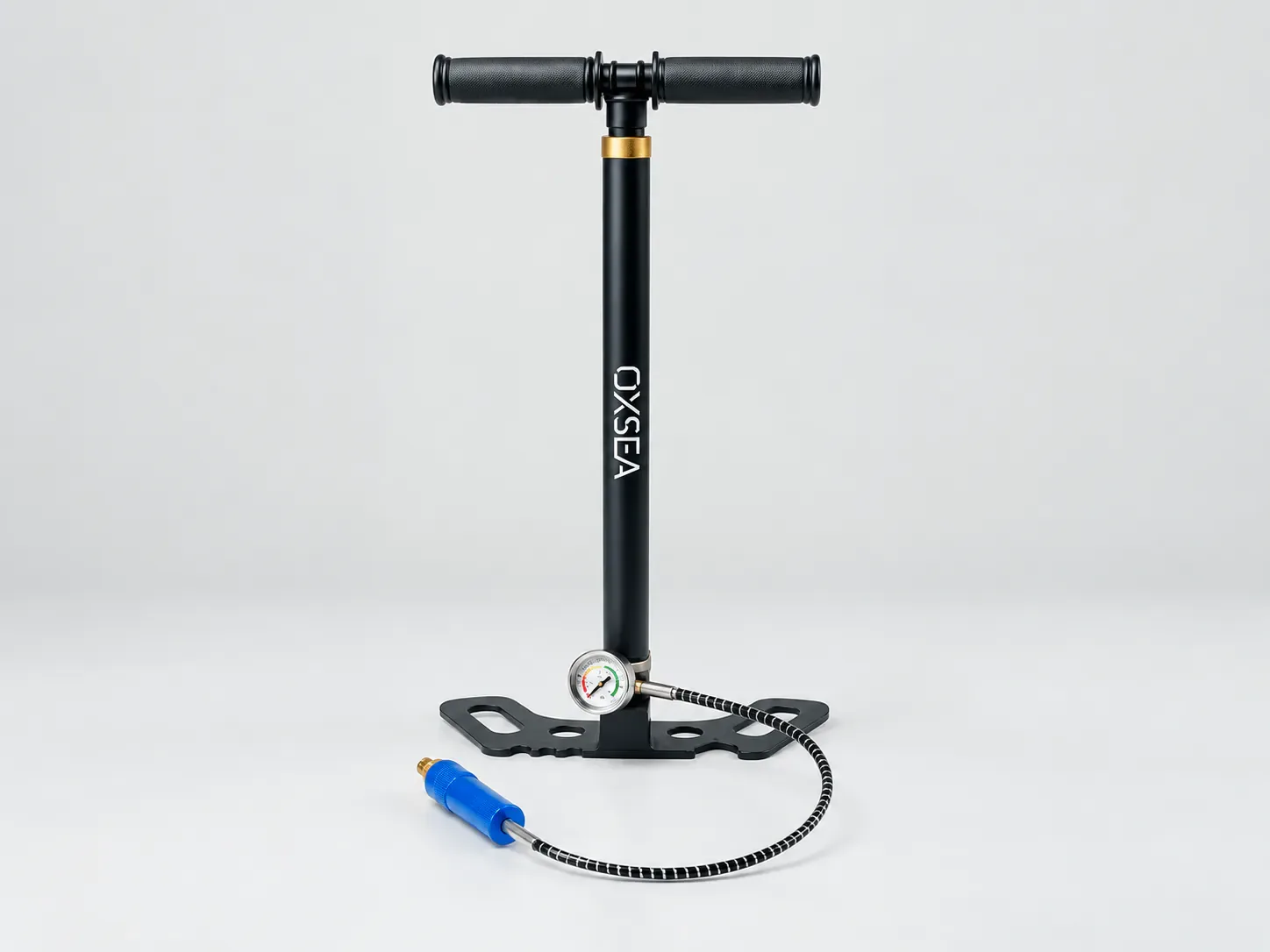
Choose the compressor if you use a 1 liter or 2.3 liter tank, dive several times a day, or simply do not want to pump for 20 minutes after every session. Choose the hand pump if you only use a 0.5 liter tank, dive now and then, or often have no power where you go.
Updated October 20, 2026 · by the OXSEA team
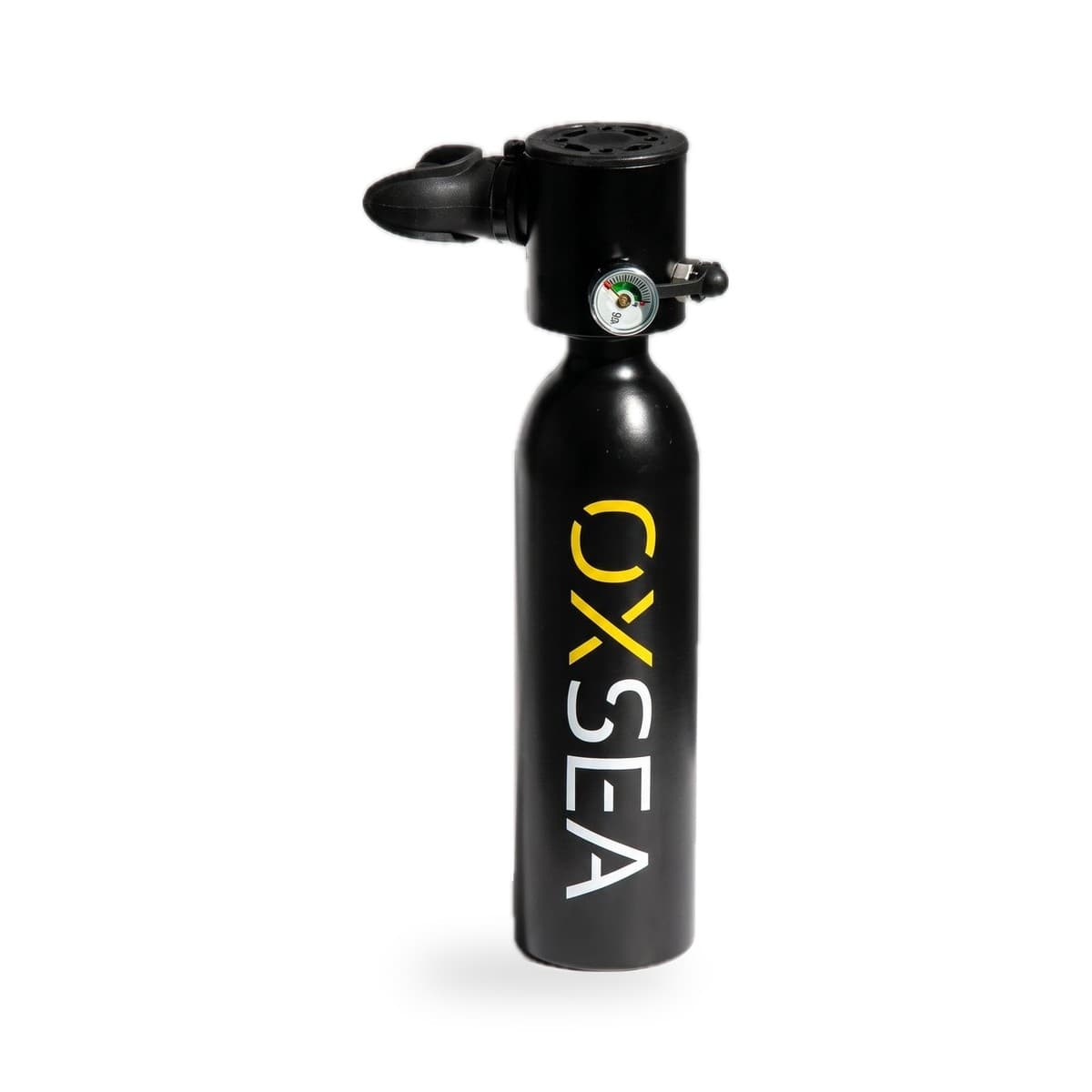
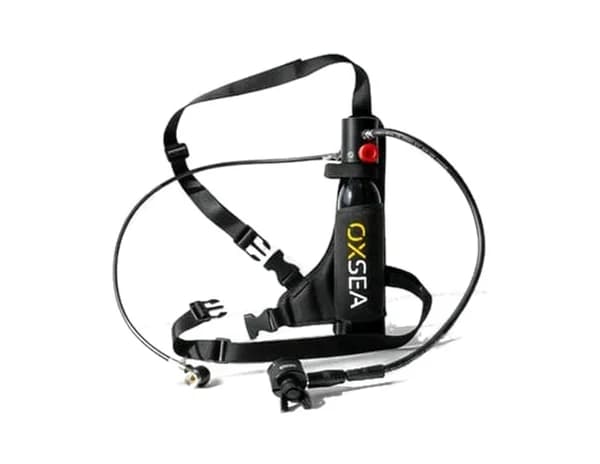
The rest of the range
Guides
Dive flag rules in the US: what to fly when you go under the boat with a mini tank
5 min read
Spearfishing with a mini scuba tank in the US: what Florida, California, Texas, Hawaii and Puerto Rico allow
6 min read
Cleaning your own hull in the water in California: copper paint, the 90-day wait and the soft-tool rule
5 min read