
Dive flag rules in the US: what to fly when you go under the boat with a mini tank
A mini tank makes you a diver in the eyes of the law. The divers-down flag, the Alpha flag and boat distances in Florida, Texas, North Carolina and Michigan.
Updated October 20, 2026 · 5 min read · by the OXSEA team
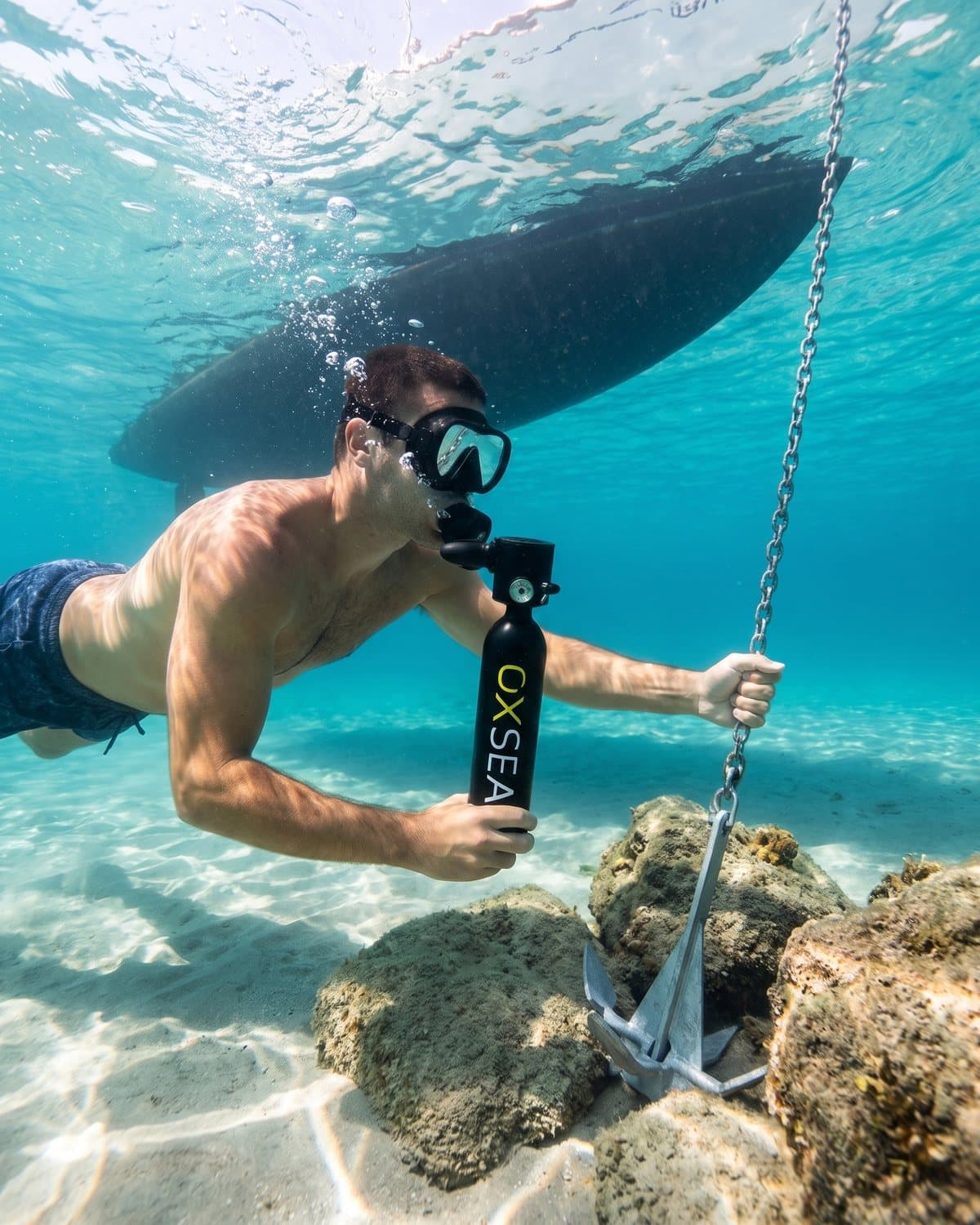
Ten minutes under your own hull at anchor feels like a private job. To the center console running up the channel, you are invisible. That is what the dive flag is for, and most coastal states have a law on how close other boats can come when it is up.
One thing surprises many boaters: in Florida, the law counts you as a diver as soon as you are in the water with a mask and snorkel. With a mini tank in your mouth, there is no gray area.
Two flags, two jobs
The divers-down flag is red with a white diagonal stripe. It marks the place where people are in the water. This is the flag state boating laws talk about, and the one other skippers recognize on the water.
Code Flag A, or the Alpha flag, is white and blue with a swallowtail. It belongs to the federal navigation rules (33 CFR 83.27): it tells other vessels that your boat is engaged in diving operations and cannot easily maneuver. When a boat is too small to carry the full set of signals, the rule calls for a rigid replica of the Alpha flag at least 1 meter (about 3.3 feet) high, visible all around.
Many boaters fly both: the Alpha flag on the boat, the red-and-white flag on the boat or on a float above the person in the water.
Florida: the most detailed rules
Florida writes it all down in section 327.331 of the Florida Statutes:
- Fly it whenever someone is diving, unless the area is used only for swimming. The law calls it a divers-down warning device: a flag, a buoy or a similar device.
- Size. The red-and-white symbol must measure at least 12 by 12 inches when it is displayed from the water, on a float or a buoy, and at least 20 by 24 inches when it is displayed from a boat. A flag must be stiffened so it stays unfurled without wind.
- On a boat, fly it at the highest point, or wherever nothing blocks it from any direction. A divers-down buoy may not be used on a boat.
- Stay close to it. On a river, inlet or navigation channel, divers must make reasonable efforts to stay within 100 feet of their flag, and other boats to stay at least 100 feet away. On all other waters, the figure is 300 feet.
- Other boats slow down. Within those 100 or 300 feet, a boat may go no faster than it takes to keep headway and steerage, apart from law enforcement and rescue.
- Take it down as soon as everyone is back on board or ashore. You may not run a boat with the flag up unless someone is in the water.
Breaking these rules is a noncriminal infraction, the boating equivalent of a ticket.
Texas, North Carolina and Michigan
| State | What the law says |
|---|---|
| Texas | No boat within 50 feet of a buoy or vessel showing a diver down flag, and no faster than needed for steerage within 150 feet. The flag is red with a white diagonal stripe, at least 15 by 15 inches. Divers are only protected if they display it. (Parks and Wildlife Code, section 31.1021) |
| North Carolina | Divers display a flag at the dive site, square, at least 12 inches on each side, red with a white diagonal stripe. A boat under way may not come closer than 50 feet to it, unless the flag unreasonably blocks navigation. (General Statutes, section 75A-13.1) |
| Michigan | No boat within 200 feet of a buoyed diver's flag, unless it is tending the dive, and divers must stay within 100 feet of their flag. The flag is red, at least 14 by 16 inches, with a white stripe. (Michigan Compiled Laws, section 324.80155) |
Other states have their own figures, and some leave it to general rules on careless operation. Before your first trip, check the boating handbook of the state you are in.
A routine for the ten-minute hull job
- Engine off, keys out, before anyone goes in. A turning propeller and a diver under the stern never mix.
- Flag up first, at the highest point or on a float right above you.
- Stay close to your flag. In Florida, 100 feet in a channel and 300 feet elsewhere. Swimming away from it takes away the protection it gives you.
- Leave someone on deck if you can, to watch traffic, pass tools and keep track of your time. Never dive alone.
- Flag down when you are out. A flag left flying when no one is in the water teaches other skippers to ignore it.
How long you will be down there
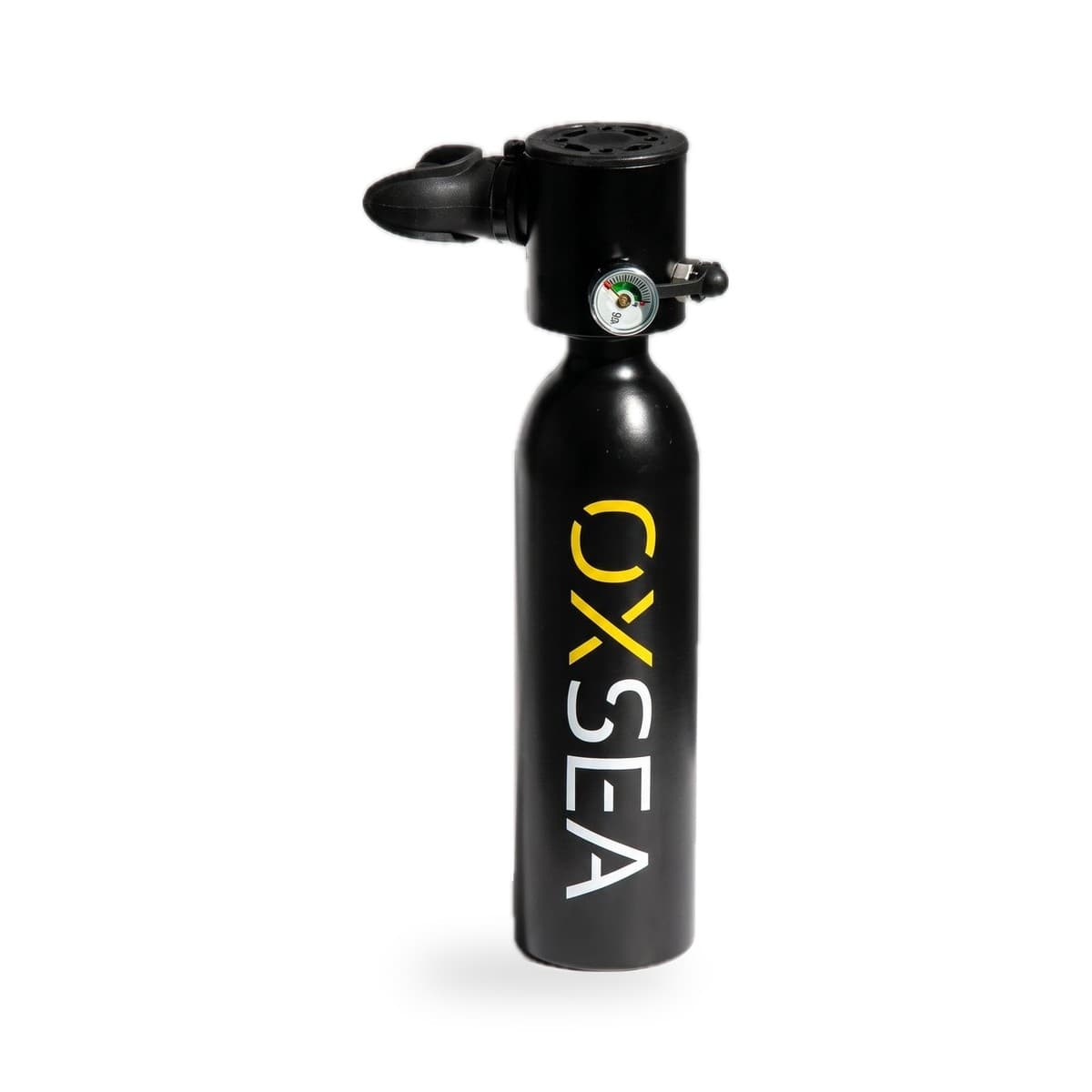
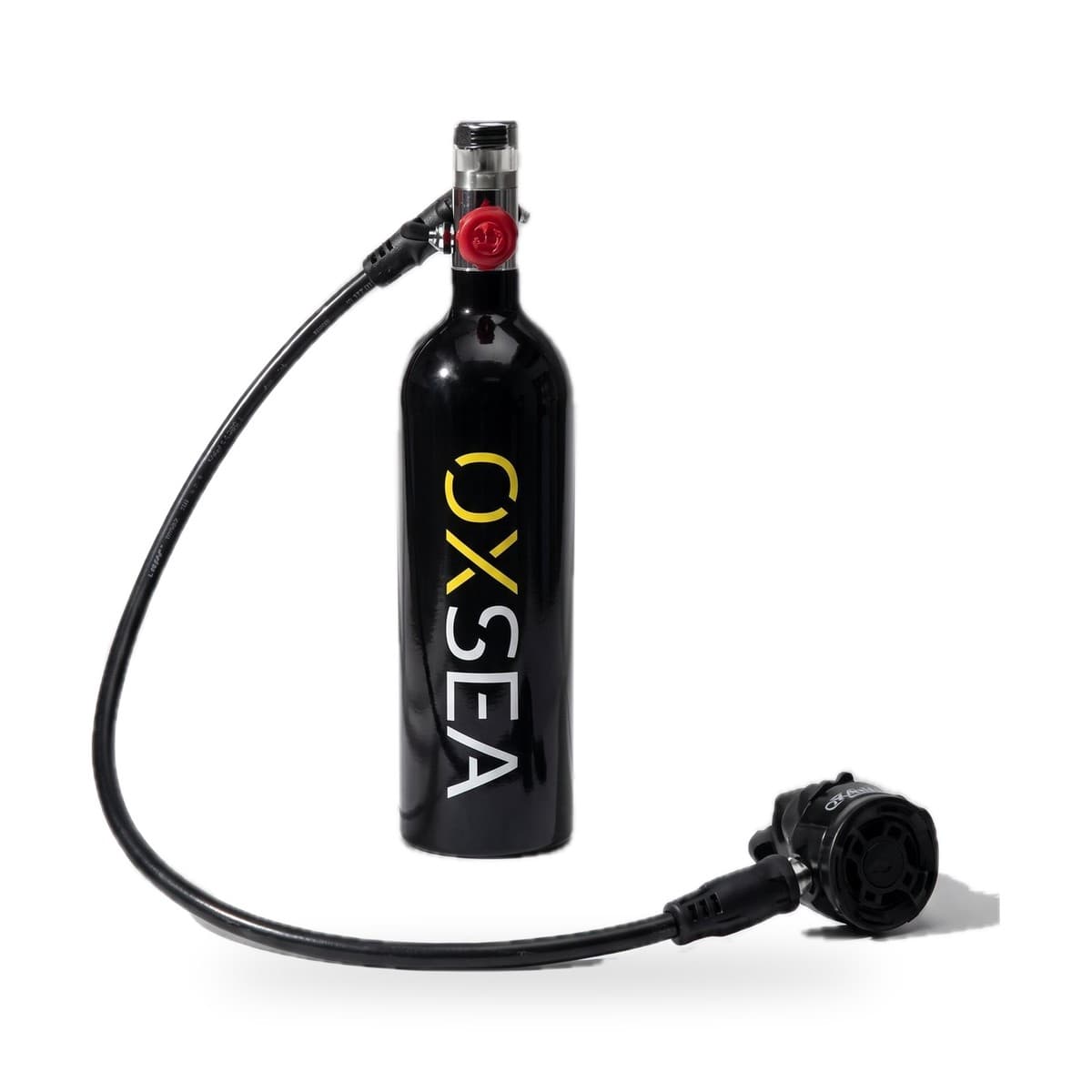
Plan the job around your air. Near the surface and at rest, a 0.5 L tank gives up to 8 minutes, the 1 L OX1000 around 15 and the 2.3 L OX2000 20 to 25. Scraping a hull or cutting a line off a propeller is hard work and shortens that a lot. Come up with air left on the gauge.
The safety rules do not change because you are only three feet under the boat: breathe continuously, never hold your breath on the way up and ascend slowly. Our safety guide covers them, and our guides on clearing a rope from a propeller and cleaning a hull in the water take you through the jobs themselves.
Sources
- Florida Statutes, section 327.331, Divers; definitions; divers-down warning device required; obstruction to navigation of certain waters; penalties
- Texas Parks and Wildlife Code, section 31.1021, Diver Down Flag
- North Carolina General Statutes, section 75A-13.1, Skin and scuba divers
- Michigan Compiled Laws, section 324.80155, Diver's flag
- US Coast Guard, Inland Navigation Rules, 33 CFR 83.27, Vessels not under command or restricted in their ability to maneuver
Laws change and local rules can add to them. Check your state's current boating handbook before you go.
The range
More guides
Spearfishing with a mini scuba tank in the US: what Florida, California, Texas, Hawaii and Puerto Rico allow
6 min read
Cleaning your own hull in the water in California: copper paint, the 90-day wait and the soft-tool rule
5 min read
Cleaning your hull in the water in Florida: what Clean Marinas allow, and what to do when a manatee shows up
4 min read